Let us talk about a scholarship destination that most Nigerian students completely overlook, and that is honestly a mistake.
The Netherlands.
Yes, the land of tulips, windmills, and some of the most progressive universities in Europe. While everyone is queuing up to apply for Chevening (UK) and DAAD (Germany), a much smaller crowd is competing for Dutch scholarships, which means your chances are significantly better if you play this right.
The Netherlands has over 13 universities that consistently rank among the top 200 globally. Their programs are internationally recognised, often taught entirely in English, and structured to produce graduates who are both academically rigorous and practically minded.
And, here is the part that should get your attention; the Dutch government and several Dutch universities offer fully or partially funded scholarships specifically for students from developing countries like Nigeria.
In this guide, we will break down the main scholarships available to Nigerian students who want to study in the Netherlands, starting with the two biggest ones: the Orange Tulip Scholarship and the Holland Scholarship, plus other options you should know about.
READ ALSO: Canada Masters Scholarships for Nigerian Students (10 Best Options)
Table of Contents
Why Study in the Netherlands?
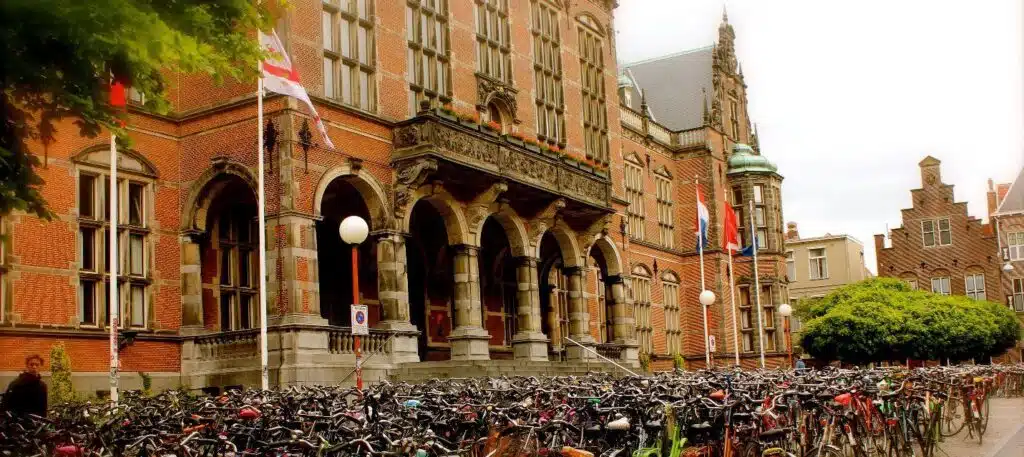
Before we get into the scholarships, here is why the Netherlands deserves a spot on your shortlist.
English-Taught Programs The Netherlands has one of the highest numbers of English-taught Masters programs in continental Europe — over 2,000 programs in English across 13 universities. Language barrier is essentially not an issue.
Problem-Based Learning Dutch universities are globally recognised for their Problem-Based Learning (PBL) approach — students work in small groups to solve real-world problems rather than sitting in large lecture halls passively receiving information. For Nigerian students used to the traditional system, this is a significant shift — but one that produces highly adaptable graduates.
World-Class Institutions Delft University of Technology, Wageningen University, Leiden University, University of Amsterdam, Utrecht University — these are not just good universities. They are some of the best in the world for specific fields.
Location in Europe The Netherlands is at the heart of Europe. Living there gives you access to a professional network that spans Germany, France, Belgium, and beyond. For internships, conferences, and career opportunities, the location is unbeatable.
Post-Study Work Opportunities After completing a Masters in the Netherlands, you can apply for an Orientation Year Permit (Zoekjaar) — giving you up to one year to find work in the Netherlands or set up a business. This is useful even for scholars who plan to return to Nigeria, as it allows you to gain international work experience before going back.
Overview of Dutch Scholarships for Nigerians
The main scholarship options available to Nigerian students for study in the Netherlands are:
| Scholarship | Who Funds It | Coverage | Level |
|---|---|---|---|
| Orange Tulip Scholarship (OTS) | Dutch Government + Universities | Partial to Full | Masters |
| Holland Scholarship | Dutch Government + Universities | €5,000 (partial) | Masters/Bachelor |
| Orange Knowledge Programme (OKP) | Dutch Government (via Nuffic) | Full | Short courses + Masters |
| University-specific scholarships | Individual universities | Varies | Masters/PhD |
Let us break each one down properly.
1. Orange Tulip Scholarship (OTS) — Full Breakdown
The Orange Tulip Scholarship is the most well-known Dutch scholarship for students from specific countries — and Nigeria is on the eligible country list.
Who funds it? The OTS is a joint initiative between the Dutch government (via Nuffic, the Dutch organisation for internationalisation in education) and participating Dutch universities and sometimes Dutch companies. Each participating university offers a different number of awards and coverage levels, so the details vary by institution.
What does it cover? This is where it gets nuanced. The OTS is not a single, standardised scholarship. Each participating university sets its own coverage for OTS awards. Coverage ranges from:
- Partial scholarship: A tuition waiver of 25–50% (meaning you still pay part of the fees)
- Full tuition waiver: No tuition fees at all
- Full scholarship: Tuition waiver + monthly living allowance
The most competitive universities (like Delft or Wageningen) tend to offer more generous coverage.
Which universities participate? Participating universities include (but are not limited to):
- Delft University of Technology (TU Delft)
- Wageningen University & Research
- Erasmus University Rotterdam
- University of Groningen
- Maastricht University
- University of Twente
- HAN University of Applied Sciences
- And several others
The list changes slightly each year, so always check the official Nuffic/OTS website for the current participating institutions.
Who is eligible?
- Nigerian citizens (Nigeria is on the eligible country list)
- Applying for a degree program at a participating Dutch university
- You must NOT already be living in the Netherlands
- Strong academic record (First Class or 2:1 equivalent)
- Specific eligibility criteria vary by participating university
How to apply? This is important, you do not apply for the OTS directly through a central portal. You apply through your chosen Dutch university. The process typically works like this:
Step 1: Choose your Dutch university and program
Step 2: Apply for admission to that university before the scholarship deadline (university admission and OTS application are often linked)
Step 3: During the university application, you will typically see an option to apply for the OTS — complete that section
Step 4: The university’s scholarship committee selects OTS recipients from among admitted students
Key Dates: The OTS typically opens around October–November each year and closes around January–February for programs starting in September. However, each university sets its own deadline — some earlier, some later. Check the specific university’s OTS page.
Pro Tip for OTS: Apply to universities where your field of study is particularly strong. Niche fields at specialist universities (like Water Management at IHE Delft, or Food Technology at Wageningen) tend to have better funding ratios because there are fewer competing applicants from Nigeria in those specific programs.
2. Holland Scholarship — Full Breakdown
The Holland Scholarship is a smaller, partial scholarship offered by the Dutch Ministry of Education, Culture and Science in collaboration with Dutch universities.
What does it cover? A one-time grant of €5,000 (approximately ₦5–6 million at recent exchange rates). This is paid in the first month of your program and is meant to help with initial settling-in costs. It does NOT cover full tuition or ongoing living expenses — think of it as a starting bonus, not a full scholarship.
Why bother with a partial scholarship? Because €5,000 is still significant money, especially for initial setup costs (accommodation deposit, transport card, household items, winter clothing). And because it is often easier to get than the OTS or OKP, meaning it is a realistic option even for applicants who might not qualify for full scholarships.
Also, holding a Holland Scholarship looks good on your CV and demonstrates that you were selected as a competitive international student.
Who is eligible?
- Non-EU/EEA nationality (Nigerians qualify)
- Applying for a Bachelor’s or Masters program at a participating Dutch university
- Not having previously studied or worked in the Netherlands
- Demonstrating academic excellence
How to apply? Similar to the OTS — you apply through your chosen university. Most universities that offer the Holland Scholarship have an option to apply for it as part of the university admission process. Check each university’s specific page for the Holland Scholarship.
3. Orange Knowledge Programme (OKP) — The Most Underrated Dutch Scholarship
This is the one that most Nigerian students have never heard of — and it may be the most accessible fully funded Dutch scholarship available.
What is the OKP? The Orange Knowledge Programme (OKP) is funded by the Dutch Ministry of Foreign Affairs and administered by Nuffic. It is specifically designed for mid-career professionals from developing countries — including Nigeria — to study short courses or full Masters programs at Dutch institutions.
The OKP replaced and expanded the older Netherlands Fellowship Programme (NFP).
What does it cover? The OKP is a FULL scholarship for eligible candidates. Coverage includes:
- Full tuition fees
- Monthly living allowance (sufficient for basic living in the Netherlands)
- International travel costs (return flights from Nigeria)
- Visa and residence permit costs
- Health and accident insurance
- Baggage allowance
Who is eligible? This is the crucial part. The OKP has specific requirements:
- Nigerian citizenship (or passport holder of another eligible country)
- Currently employed (you must be working — OKP is for employed professionals, not fresh graduates)
- Minimum of 3 years of relevant work experience after your first degree
- Your employer must endorse your application (you need a letter from your employer confirming they support your study leave)
- Studying a field that is on Nigeria’s priority list under the OKP (these vary by year — check the current Nuffic Nigeria country page)
- You must return to your employer/Nigeria after completing your studies
Priority Sectors for Nigeria under OKP (these are typically):
- Food and Nutrition Security
- Water, Sanitation, and Hygiene (WASH)
- Sexual and Reproductive Health and Rights
- Security and the Rule of Law
- Private Sector Development
How to apply?
- Go to the Nuffic OKP website (nuffic.nl/en/subjects/orange-knowledge-programme)
- Find the list of eligible programs for Nigerian applicants
- Apply for admission to the Dutch institution offering that program
- Simultaneously submit your OKP scholarship application
- Get your employer to provide an endorsement letter
- Submit both applications before the deadline
Key Dates: OKP application deadlines vary by program and institution. Some programs have November deadlines; others are in February. Start early.
Pro Tip: The OKP is less well-known than Chevening or DAAD, which means less competition from Nigerians. If you are an employed professional with 3+ years of experience in one of the priority sectors, the OKP deserves serious attention.
4. University-Specific Scholarships in the Netherlands
Several Dutch universities offer their own scholarships for international students that Nigerians can access. Here are the most notable ones:
Wageningen University Excellence Scholarship (WUR) Wageningen is the world’s top university for Agriculture and Life Sciences. Their Excellence Scholarship program offers up to €17,622 (covering tuition) for selected international Masters students. If you want to study anything related to food, agriculture, environmental science, or nutrition, Wageningen should be on your list.
Delft Excellence Scholarship (TU Delft) TU Delft is Europe’s top engineering and technology university. Their scholarship covers full tuition (approximately €18,750 per year) plus a monthly allowance of €1,000. This is for exceptional students in Engineering, Architecture, Computer Science, and related fields. Competition is fierce globally, but Nigerians with strong STEM backgrounds should apply.
Erasmus University Rotterdam (EUR) Scholarships Erasmus has several international scholarships. For Masters students, the EUR Excellence Scholarship provides up to €24,000 for one-year programs. Erasmus is particularly strong for Economics, Business, Law, and Social Sciences.
University of Amsterdam (UvA) Amsterdam Merit Scholarship The Amsterdam Merit Scholarship covers full tuition plus a €5,000 living stipend for the top international Masters applicants. Fields covered include Social Sciences, Humanities, Law, Economics, and Science.
University of Groningen Excellence Scholarship University of Groningen offers the Excellence Scholarship (talent grant) of €15,000 for high-achieving international Masters students. Available across multiple disciplines.
Maastricht University Holland-High Potential Scholarship A partial scholarship for non-EU students with strong academic records applying to Maastricht’s Masters programs.
How Much Does It Cost to Live in the Netherlands?
Let us be honest about this, because it matters. The Netherlands is not cheap.
If you are on a partial scholarship or planning to study there with personal savings or family support, here is a realistic monthly budget breakdown:
| Expense | Estimated Monthly Cost (EUR) |
|---|---|
| Accommodation (shared) | €400 – €700 |
| Food | €200 – €350 |
| Transport (OV-chipcard) | €80 – €120 |
| Health insurance | €100 – €130 |
| Mobile data and internet | €25 – €40 |
| Personal expenses | €100 – €150 |
| Total (approximate) | €900 – €1,500 |
For full scholarship holders (OKP, TU Delft Excellence, etc.), the living allowance provided is generally designed to cover basic living in the Netherlands. You will not be living lavishly, but you will be comfortable.
For partial scholarship holders, you will need to plan for the shortfall — either from family support, savings, or a part-time job (international students in the Netherlands can work up to 16 hours per week on a student visa, which can supplement your income).
Applying for a Dutch Student Visa as a Nigerian
To study in the Netherlands, Nigerians need a MVV (Machtiging tot Voorlopig Verblijf) — a provisional residence permit — combined with a regular residence permit. For most students, the Dutch university arranges the MVV on your behalf once you are admitted.
Here is the general process:
- Receive admission from the Dutch university
- The university submits an application to IND (Dutch Immigration and Naturalisation Service) on your behalf
- You receive a letter to visit the Dutch Embassy or VFS Global in Nigeria to submit biometrics and collect your visa
- Pay the visa/MVV fee (for scholarship holders, this is often covered)
- Travel to the Netherlands and collect your residence permit on arrival
Important points:
- Start the visa process as soon as you receive your admission letter — it can take 4–8 weeks
- You will need proof of sufficient funds (scholarship letter serves as this for scholarship holders)
- You will need your original admission letter, passport, passport photos, and health insurance proof
Tips for a Winning Dutch Scholarship Application
Research Your University Thoroughly Dutch scholarship committees — whether OTS or university-specific — want to see that you chose their institution for a specific academic reason, not just because it is in Europe. Know the specific modules, research groups, or faculty members that drew you to that program.
Align Your Field With Priority Sectors (for OKP) If you are applying for OKP, your proposed study must directly align with the priority sectors for Nigeria. If it does not, you will not be considered, regardless of how strong your application is otherwise.
Your Motivation Letter Is Everything Dutch programs value applicants who can articulate a clear problem they want to solve and a specific plan for how their Dutch education will help them solve it. Generic motivation letters fail consistently.
Apply Early Dutch scholarship deadlines are often in January or February — earlier than many Nigerian students expect. By the time most people start thinking about scholarship applications in April, the Dutch windows are already closed.
Get Your English Score Early Most Dutch universities require IELTS 6.5 or TOEFL iBT 90+ for admission. Some programs (like at TU Delft) require higher. Sort this out months before you plan to apply.
READ ALSO: How to Write a Winning Motivation Letter for a Masters Scholarship
FAQs About Netherlands Scholarship for Nigerians
Is IELTS required for Netherlands scholarships? Yes, for most programs. The standard requirement is IELTS 6.5 overall (with no individual band below 6.0) or TOEFL iBT 90+. Some competitive programs require IELTS 7.0. Check your specific program requirements.
Can I study at any Dutch university with an OTS scholarship? Only at participating universities. The list of participating institutions for OTS changes slightly each year. Check the official Nuffic website for the current list.
Is the Orange Tulip Scholarship fully funded? It depends on the university and the specific award. Some OTS awards cover full tuition; others cover only partial tuition. Always check the specific coverage offered by your chosen university before applying.
Can I work part-time while studying in the Netherlands on a scholarship? International students in the Netherlands are generally permitted to work up to 16 hours per week during the academic year. However, some scholarship conditions (particularly OKP) may restrict or limit outside employment. Check your specific scholarship terms.
How competitive are Dutch scholarships for Nigerians? Less competitive than Chevening or DAAD, because fewer Nigerian students actively pursue the Netherlands. This is actually an advantage for well-prepared applicants. The OKP in particular has fewer Nigerian applicants than it deserves.
What happens after I finish my degree in the Netherlands? You can apply for the Orientation Year Permit (Zoekjaar) to stay in the Netherlands for up to one year to find work. However, most scholarship conditions (OTS, OKP) require you to return to Nigeria. Check your specific scholarship agreement.
READ ALSO: DAAD Scholarship Germany: Choosing the Right EPOS Course
In Summary
The Netherlands is one of the most underrated scholarship destinations for Nigerian students, and that is precisely why smart applicants should target it.
The Orange Tulip Scholarship, the Orange Knowledge Programme, and university-specific awards at institutions like Delft, Wageningen, Erasmus, and Amsterdam offer genuine pathways to fully or heavily subsidised graduate education in one of Europe’s most advanced countries.
The key advantages for Nigerian applicants are:
- Less competition than Chevening or DAAD (because fewer people are applying)
- Shorter programs (most Dutch Masters are 1–2 years)
- Strong English-language programs with no language barrier
- World-class research institutions, particularly in Agriculture, Engineering, Economics, and Health
If you are serious about studying abroad in 2026 or 2027, add the Netherlands to your shortlist. Research the OKP if you are an employed professional. Look at university-specific scholarships if you are a fresh graduate with a strong academic record.
The tulips are beautiful. The universities are better.
Which field are you thinking of studying in the Netherlands? Drop a comment below and let us know — we can point you toward the best Dutch university for your specific area.
Disclaimer: Scholarship details, coverage amounts, and application deadlines change annually. Always verify current information on the official Nuffic website (nuffic.nl) and individual university websites before submitting your application. Campus Hustle Nigeria is not affiliated with Nuffic or any Dutch institution and does not charge for scholarship guidance.