Have you been looking for Fully Funded PhD Programs in USA for International Students? Here is something that will shock most Nigerian students.
In the United States, paying for a PhD is actually the exception, not the rule.
Unlike a Masters degree (where you often have to pay tuition and scramble for scholarships) most PhD programs at American universities are designed to be fully funded from day one. The university pays your tuition. The university pays you a monthly stipend. The university gives you health insurance. And in return, you do research and sometimes teach undergraduate classes.
You read that correctly. They pay you to do your PhD.
This is not a scam. This is not one of those “too good to be true” things your neighbour’s cousin told you about. This is how the American research university system actually works — and thousands of international students, including Nigerians, are benefiting from it every year while their peers at home are paying through the nose for a Masters degree.
The catch? The admission process is competitive. American PhD programs at top universities are some of the most selective academic programs in the world. And navigating the application process from Nigeria (with all the TOEFL fees, GRE scores, application charges, and logistics) requires serious preparation.
But if you do it right? You could be doing a fully funded PhD at MIT, Stanford, Harvard, Princeton, Cornell, or Johns Hopkins — with a monthly stipend landing in your account every month.
Let us break down exactly how it works.
READ ALSO: Fully Funded PhD Scholarships in the UK for Nigerian Students (2026)
Table of Contents
Why American PhDs Are Almost Always Funded
American research universities operate on a model where PhD students are not just students — they are research workers and teaching workers who contribute directly to the university’s output.
Here is the basic structure:
- The university or a professor has a research grant from the government (NSF, NIH, DOE, DARPA, etc.) or private foundations
- The grant includes funding for graduate research assistants (GRAs)
- PhD students are hired as GRAs or Teaching Assistants (TAs) and paid a stipend
- In exchange for the stipend, they do research under their supervisor or teach undergraduate courses
- Their tuition is waived as part of the package
This is a symbiotic relationship. The university gets research output and teaching labour. You get a free PhD and a monthly income. Everybody wins.
The result is that at virtually every top-ranked US PhD program in STEM, Social Sciences, and many Humanities fields, international students are funded at the same rate as domestic students. There is no “international student surcharge” on a funded PhD position.
This is the most important thing most Nigerian students do not know about American PhDs. Spread this information.
What “Fully Funded” Actually Means in the US
When an American university says your PhD is “fully funded,” here is exactly what that means:
Tuition Waiver Your tuition fees — which at top US universities can run $50,000 to $60,000 per year for international students — are completely waived. You pay zero.
Monthly Stipend You receive a monthly stipend ranging from approximately $1,800 to $4,000 per month depending on the university, the field, and the city. STEM fields and Ivy League universities tend to pay higher stipends. Some top universities have recently increased stipends significantly — MIT’s stipend, for example, has exceeded $4,000/month.
In Naira terms, a $2,500/month stipend is approximately ₦3.5–4 million per month at recent exchange rates. That is not a joke.
Health Insurance Full health insurance coverage is provided. In a country where a hospital visit can cost thousands of dollars, this is not a small benefit.
Fee Waivers Some universities waive other student fees (technology fees, activity fees, etc.) for funded PhD students in addition to tuition.
What is typically NOT included: housing (you pay rent from your stipend), flights to the US, personal expenses beyond your stipend, and family member support.
Which Fields Are Most Likely to Be Funded?
Not all fields are equally funded in the US. Here is the honest breakdown:
Almost Always Fully Funded:
- Engineering (all disciplines)
- Computer Science and Artificial Intelligence
- Physics, Chemistry, Biology, Biochemistry
- Neuroscience and Cognitive Science
- Mathematics and Statistics
- Biomedical Engineering
- Environmental Science and Earth Sciences
- Economics (at research universities)
- Public Health and Epidemiology
Usually Funded (but sometimes partially):
- Political Science and International Relations
- Sociology and Anthropology
- Psychology (experimental/research-based programs)
- Education (research-based programs)
- History and Sociology of Science
Sometimes Funded, Sometimes Not:
- Arts and Humanities (Literature, History, Philosophy) — funding exists but is more competitive and stipends are lower
- Social Work and Education policy — varies significantly by program
- Business and Management — MBA programs are almost never funded; research-based DBA/PhD programs sometimes are
Rarely Funded:
- Professional degrees (MFA, JD, MD, MBA) — these are almost never funded in the same way
- Terminal Masters programs — these are usually paid programs
The safest strategy for Nigerian students? Apply to STEM, Economics, or quantitative Social Science programs. The funding is most reliable and most generous in these fields.
The Best Fully Funded PhD Programs for Nigerian Students
Rather than listing specific universities (which changes constantly and depends on your field), let us identify the categories of programs that Nigerian students have succeeded in most consistently.
Ivy League and Equivalent Universities
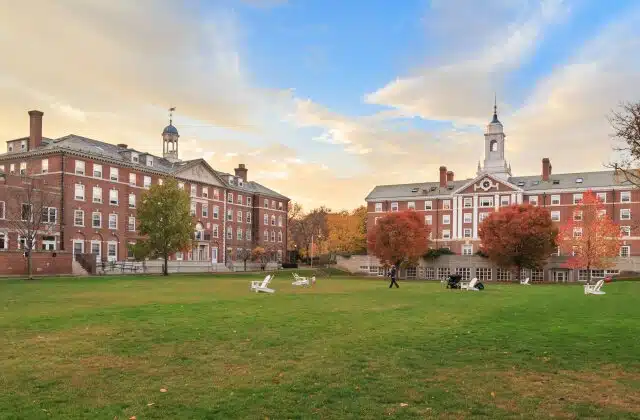
Harvard, Yale, Princeton, Columbia, Cornell, Penn, Dartmouth, Brown (all Ivy League universities) fund their PhD students comprehensively. At Harvard, for example, all PhD students in most departments receive full tuition, stipend, and health insurance from day one.
The prestige comes with extremely selective admissions, acceptance rates for PhD programs can be below 5% in popular fields. However, having a First Class degree from a Nigerian university plus strong GRE scores plus a compelling research proposal plus a supervisor who knows your work puts Nigerian applicants in a genuinely competitive position.
Top STEM Universities
MIT, Stanford, Caltech, Georgia Tech, University of Michigan, Carnegie Mellon, University of Illinois — these are the powerhouses for STEM PhD funding. Engineering and CS PhD students at MIT and Stanford are particularly well-funded, with stipends that have recently increased significantly.
Strong State Universities (High Funding, Lower Competition)
Here is the insight that Nigerian students consistently miss: you do not have to go to Harvard for a fully funded PhD. Universities like University of Texas Austin, Ohio State University, Purdue University, Arizona State University, University of Florida, Michigan State University, Rutgers — all strong research universities — fund international PhD students generously, and the competition is significantly less intense than the Ivy League.
A funded PhD at a strong state university is infinitely better than an unfunded place at a prestigious one.
HBCUs (Historically Black Colleges and Universities)
Howard University, Morehouse College, Spelman College and other HBCUs in the US have been making significant investments in PhD programs, and some have specific outreach to African students. Nigerian students at HBCUs have reported feeling a strong sense of cultural community alongside their academic experience.
How the US PhD Application Process Works
Understanding the process is essential because it is quite different from Nigerian or UK university applications.
Step 1: Identify Your Research Area and Target Programs Define your research interest as specifically as possible. Then identify 8–12 US universities with strong PhD programs in that area. A mix of reach schools (top 10), match schools (top 20–50), and safety schools (strong programs outside the top 50) gives you the best spread.
Step 2: Research Faculty at Each University Visit each department’s faculty page. Read the research profiles of professors in your area. Identify 2–4 professors at each university whose work aligns with yours. Note their names — you will reference them in your application.
Step 3: Prepare Your Application Materials The standard US PhD application requires:
- Statement of Purpose (SOP) — the most important essay
- Writing sample (for Humanities and some Social Sciences)
- Three letters of recommendation
- Undergraduate (and Masters if applicable) transcripts
- TOEFL or IELTS scores
- GRE scores (if required — see next section)
- Application fee (typically $70–$120 per university — this adds up fast)
Step 4: Apply Through Each University’s Online Portal Each university has its own application portal. You apply to each one separately. Deadlines for most PhD programs are between November 15 and January 15 for fall (September) entry. Some programs have December 1 or December 15 deadlines — do not miss these.
Step 5: Application Fee Waivers Many US universities offer application fee waivers for students from low-income countries or students who demonstrate financial need. Always apply for fee waivers before paying. The McNair Scholars program, GRE fee reductions, and specific university waiver programs are worth researching. This can save you hundreds of dollars across multiple applications.
Step 6: Interviews (for Some Programs) Some programs — particularly in Biology, Neuroscience, and Medical fields — conduct PhD recruitment weekends where shortlisted applicants are invited for interviews (usually in January or February). These are typically funded by the university — they pay your flights and accommodation.
Step 7: Offers and Decision Admission decisions typically come between February and April. You have until April 15 (the standard US PhD acceptance deadline) to accept or decline offers. This gives you time to compare funding packages from different universities.
GRE — Do You Still Need It?
This is one of the most common questions Nigerian students ask about US PhD applications in 2026.
The short answer: it depends on the program, but many top programs have gone GRE-optional or GRE-free.
During the COVID-19 pandemic, many US universities suspended GRE requirements. A large number of them have since made the suspension permanent. As of 2026:
- MIT (most departments): GRE not required
- Harvard (most departments): GRE optional or not required
- Stanford: Varies by department — check each program specifically
- Most top CS and Engineering programs: GRE no longer required
- Biology and Biomedical programs: Many still recommend GRE
- Economics: Many top programs still prefer GRE scores
Our advice: Check each target program’s website specifically for their current GRE policy. If a program is GRE-optional, submit your scores only if they are strong (Verbal 155+, Quantitative 160+). A weak GRE score submitted optionally can hurt more than help.
If a program still requires GRE, prepare seriously. The GRE Quantitative section is particularly important for STEM and Economics PhD applicants.
How to Write a Winning US PhD Statement of Purpose
The Statement of Purpose (SOP) is the most important document in a US PhD application. Unlike the UK personal statement or a European motivation letter, the American SOP is almost entirely research-focused.
Here is what a winning US PhD SOP must contain:
Opening: Your Research Question Start with the specific research question or problem that drives your application. Not your biography — your intellectual obsession. What question keeps you up at night? What problem have you been trying to solve?
Your Academic and Research Background Walk through the specific academic experiences that have prepared you for PhD-level research. Mention your undergraduate thesis, any research assistantships, publications, or significant projects. Be specific — name the project, the methodology, the findings.
Your Proposed Research For most US PhD programs (especially in STEM), you should have at least a preliminary research direction — a broad area or specific question you want to explore. This does not have to be the exact thesis you end up writing, but it shows intellectual readiness.
Why This Program Specifically Name specific faculty members at this university whose work aligns with yours — and explain why. Name specific courses, labs, or research centres. Show that you have genuinely researched this program and that your application is not a copy-paste from 11 other applications.
Your Career Goals What will you do with this PhD? Academia? Industry research? Policy? Government? Be honest and specific.
Length: Typically 1–2 pages (500–1,000 words). Follow each program’s specific instructions.
Finding the Right US PhD Supervisor
Just like the UK, US PhD admissions are largely supervisor-driven in most departments — particularly in STEM. A professor who is excited about your application can advocate for your admission from within the department.
Before applying: Email 2–3 professors at each of your target universities. Keep the email short (under 300 words), specific (reference their recent paper), and professional. Ask if they are accepting new PhD students for the upcoming cycle and if your proposed research area fits their current work.
What a positive response looks like: “Yes, I am accepting students. Please apply to the program and mention my name in your SOP.” That is an invitation to apply — and it significantly boosts your chances.
What a negative response looks like: “I am not taking students this year” or no response. Move to the next professor on your list.
After submitting: Some supervisors will reach out to interview shortlisted applicants before the department makes admission decisions. A Zoom interview with a potential US supervisor is a very positive sign.
Life as a Nigerian PhD Student in America
Let us give you a realistic picture of what awaits.
The Money Reality Your stipend is real money, but American cities are expensive. Rent in Boston, New York, San Francisco, or Los Angeles can consume 40–60% of your stipend. Many Nigerian PhD students choose universities in mid-sized or smaller cities (Columbus, Ann Arbor, Champaign, West Lafayette) where the cost of living is much more manageable on a graduate stipend.
The Academic Workload US PhD programs are rigorous. The first 1–2 years are typically coursework-heavy, you take graduate seminars, do problem sets, and sit exams. The qualifying exam (sometimes called “comps” or “candidacy exam”) is a major hurdle. After qualifying, you focus on research. Plan for long hours, especially in experimental STEM fields.
The Nigerian Community America has one of the largest Nigerian diaspora populations in the world. In most major university cities, you will find Nigerian student associations, Nigerian churches, Nigerian restaurants (or at least stores selling egusi, stockfish, and ogbono). The community is there if you look for it.
Culture Shock America is different from Nigeria in ways that are both obvious and subtle. Americans value direct communication, punctuality, and individual achievement. The university system rewards initiative, independent thinking, and proactive engagement with professors. Attend office hours. Speak up in seminars. Build relationships with your cohort.
Health Insurance Your health insurance as a funded PhD student is comprehensive. Use it. Get your annual checkups. The US healthcare system is excellent when you have coverage.
The Visa Process As a funded PhD student, you will be on an F-1 Student Visa or J-1 Exchange Visitor Visa. Your university’s international student office will guide you through the process. Allow 3–4 months for visa processing from Nigeria, start immediately after receiving your admission and funding offer.
READ ALSO: Get Your Scholarship Past Questions & Answers PDF
FAQs
Is it true that US PhD programs are free? For research-based PhD programs at research universities, yes — funding is standard. You are not just admitted; you are hired as a researcher. Tuition is waived and you receive a stipend. This is not universally true for all universities or all fields, but it is true for most top research programs in STEM and many Social Science fields.
How long does a US PhD take? Typically 4 to 6 years for STEM and quantitative fields. Humanities and some Social Science PhDs can take 6 to 8 years. This is longer than UK PhDs (3–4 years) but the training is more structured and the funding period is longer.
Do I need a Masters degree before applying for a US PhD? No — most US PhD programs accept students directly from their Bachelor’s degree. The PhD program itself includes coursework equivalent to a Masters in the first 2 years. However, having a Masters degree (especially with research experience or publications) can strengthen your application significantly.
What TOEFL score do I need for a US PhD? Most programs require a minimum TOEFL iBT score of 80–100. Top programs often require 100+. Some accept IELTS 7.0 as an equivalent. Check each program’s specific requirements.
Can I apply for both Fulbright and a regular funded PhD position? Yes. Applying for Fulbright and simultaneously applying to funded PhD programs is completely normal and recommended. If you get a funded position and Fulbright, you typically choose one. Having both options is the ideal position to be in.
Can I work outside the university during my US PhD? On an F-1 visa, your employment is restricted to on-campus work (which your stipend covers). Off-campus work requires special authorisation (CPT or OPT). During your PhD, your stipend is designed to be your primary income. After completing your degree, OPT allows you to work in the US for 12–36 months.
READ ALSO: Fulbright Foreign Student Scholarship: Nigerians Who Got It and How
In Summary
The American PhD system is one of the best-kept secrets in Nigerian academic circles, and we are doing our best to change that.
The truth is simple: if you are admitted to a research-based PhD program at a US university, you will almost certainly be funded. Tuition waived. Stipend paid. Health insurance covered. You get paid to become one of the most highly educated people in your field.
The path requires serious preparation:
- Define your research interest precisely
- Identify target universities and faculty early
- Prepare strong application materials — especially your SOP
- Apply to 8–12 programs across different competitiveness levels
- Start in August for December/January deadlines
- Apply for application fee waivers to reduce costs
The students who win funded US PhD places are not always the most brilliant, they are the most prepared and the most strategic.
Nigeria needs more PhDs. America is willing to pay for them.
What field are you considering for your US PhD? Drop it in the comments and let us know, we can help point you toward the right programs and faculty.
Disclaimer: PhD funding structures, stipend amounts, GRE policies, and application requirements change annually and vary by university and department. Always verify current information on each university’s official website. Campus Hustle Nigeria is not affiliated with any US university and does not charge for guidance.